Friday, July 03rd, 2009 | Author: Rich

Being green around the holidays can be tricky. Many of our best rituals (Thanksgiving, July 4th, Labor Day, Super Bowl Sunday…) rely heavily on consumption (and, by extension, produce a ton of waste). So, for this July 4th, we thought we’d share some simple tips for green tweaks.

1.) Go Local

You don’t need read Michael Pollan to know food just tastes better when you know where it’s from. Maybe it’s the satisfaction of knowing you’re supporting local farmers. Perhaps it’s because your body knows when you’re eating fresh and when the food is processed. Either way, you’ll be doing the planet some good by buying food that hasn’t been trucked in from across the country.

2.) Go Easy

It’s nice to have leftovers, but how many hamburger patties and hot dogs got tossed last year at your July 4th party? When you’re buying and prepping the goodies, go easy. When you’re stacking your plate with potato salad, beans, ribs, hot dogs, watermelon and whatever else, keep in mind you’ll probably be throwing some of that out. So for all the piggies out there- myself included- there’s no shame in multiple trips to the food table.

3.) Go Gas

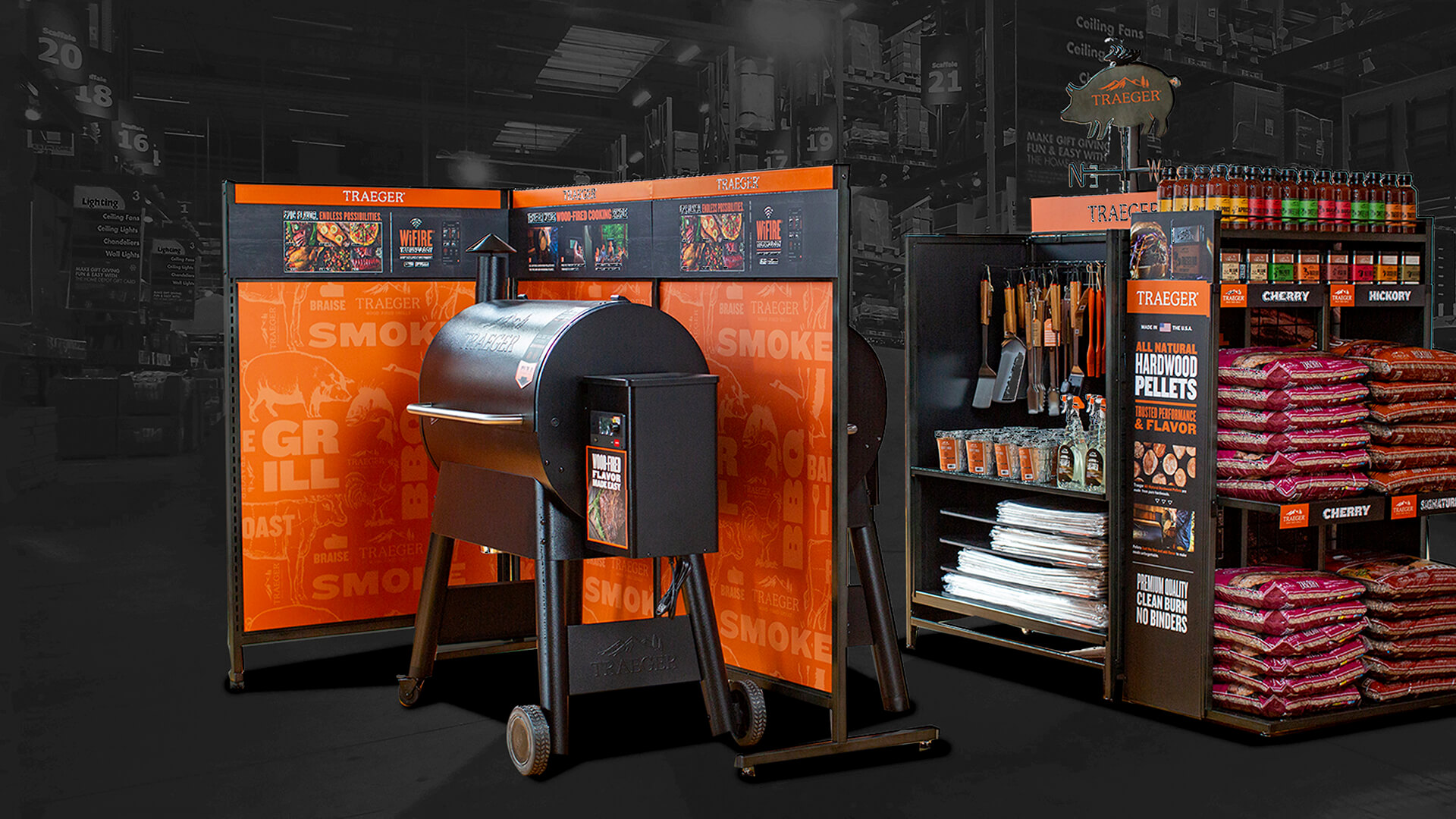
If you’re a purist, charcoal might be the only option for you. Try a 100% All Natural Hardwood Lump Charcoal. Fewer chemicals are always a good thing, but they also produce less ash than generic charcoal. Another good option is Wicked Good Charcoal, which is made from industrial scrap wood. Kingsford Charwood is good too. But gas is probably your greenest bet- it produces about half the emissions of charcoal.

4.) Go Silver

Well, maybe not silver, but at least think about using the silverware. Most July 4th meals are finger foods anyway (do we need more than a spoon?), but it might be worth busting out the cutlery instead of using the plastic alternatives. But if you’re hell bent on disposable products- and, I’ll be honest, I don’t blame you- there are some good biodegradable products you could choose. Branch and Eatware both have some good sustainble/compostable picnic accessories.

5.) Go Green

Let’s see, in my July 4th overall roundup… Be safe. Have fun. Recycle. Compost (if you can). Enjoy the fireworks (hopefully these new “eco-friendly” fireworks will catch on). Don’t go on any carnival rides- I’m still not feeling right from my ride on the tilt-a-wheel.  Go see The Hangover (finally saw it and it’s hilarious!). And, oh yeah, go U-S-A!

Thursday, July 02nd, 2009 | Author: Rich

The Anheuser-Busch brewery in Houston, TX will have 55% of it energy needs met from landfill biogas. It’s a big move for the country’s leading brewer- AB holds a 49.2% share of U.S. beer sales and is a subsidiary of the world’s leading brewer, Anheuser-Busch InBev- and, if the program is a success, could bring the entire industry along with it. Landfill biogas consists of roughly 50% methane, a green house gas 21 times more potent than carbon dioxide, and is created when organic material decomposes in landfills. It can be converted into alternative fuels, heat, steam or used to generate electricity.

The project is a partnership between the brewery, Republic Services (a leading provider of solid waste collection) and Ameresco Services (the largest independent energy services company in North America). Pipelines connect the brewery to McCarty Road Landfill, the main recipient of refuse from the residents and businesses in east Houston and surrounding suburbs.

In the project’s press release, AB explains, “the benefit of this clean energy project is equivalent to planting more than 121,050 acres of pine or fir trees or taking 97,550 motor vehicles off the road. Additional gas from the McCarty Road landfill also is captured, processed and sold to a local utility.”

Check out our previous posts on various green initiatives by brewers.

[source: Anheuser-Busch, PR Newswire]

Wednesday, July 01st, 2009 | Author: Rich

For those who haven’t seen Elephant Journal’s great interview series, “Walk The Talk” Show, it’s time to put it on your must view list. Waylon Lewis, the laid back host of the show (and brains behind the journal itself), has spoken with an impressive roster of guests on a remarkably broad range of topics.

Episodes of note include conversations with Graham Hill (founder of TreeHugger.com), Rick Peyser (of Green Mountain Coffee) and Bill McKibben (professor at Middlebury- my alma mater- author & environmentalist). Most recently, Lewis had an interesting chat with Michael Pollan (author of The Omnivore’s Dilemma) about the link between a healthy diet and the environment.

In that conversation, Pollan explains

“our eating decisions- what happens on our plate- represent our most profound engagement with the other species we share this planet with. We change the land more through our eating than anything else we do. We change the climate more than anything else we do. We change the composition of species on the planet more than anything else we do.”

Click here to go to Ele’s site and watch the rest. And while you’re at it, follow Waylon and co. on twitter.

Tuesday, June 30th, 2009 | Author: Rich

Is the Wall Street Journal at war with itself? We’ve recently given the paper some credit for its evolving coverage of all things ‘green.’ In March of this year, Alan G. Robinson and Dean M. Schroeder debunked “conventional wisdom” that might suggest a company’s costs rise as its environmental impact falls, explaining that going green can be highly cost effective. Earlier this month, WSJ editors chose to lead with this headline: “It’s Time To Cool The Planet.” In the article, Jamais Cascio proclaims, “if we’re going to avoid climate disaster, we’re going to have start getting a lot more direct. We’re going to have to think about cooling the planet.”

But in an opinion piece offered last week by WSJ columnist Kimberly Strassel, the skeptics were once again given full voice. Strassel points to a climate-change bill in the Australian Parliament that may get killed due to what she calls the “growing number of Australian politicians, scientists and citizens [that] once again doubt the science of human-caused global warming.”

“Among the many reasons President Barack Obama and the Democratic majority are so intent on quickly jamming a cap-and-trade system through Congress,” Strassel writes, “is because the global warming tide is again shifting. It turns out Al Gore and the United Nations (with an assist from the media), did a little too vociferous a job smearing anyone who disagreed with them as “deniers.” The backlash has brought the scientific debate roaring back to life in Australia, Europe, Japan and even, if less reported, the U.S.”

She continues,

“The number of skeptics, far from shrinking, is swelling. Oklahoma Sen. Jim Inhofe now counts more than 700 scientists who disagree with the U.N. — 13 times the number who authored the U.N.’s 2007 climate summary for policymakers.”

Granted, this is an opinion column, and therefore not a work of journalism, but Strassel’s suggestion that Inhofe- of all people- is uncovering “the collapse of the ‘consensus’” strains credulity. The WSJ seems in conflict with itself, as its journalists begin to report on the reality that, as this global trend towards green innovation and sustainable business continues, the U.S. will either be buying it or selling it. Meanwhile, opinion columnists like Strassel insist that this “unconvincing green science” will do nothing for us but risk job losses. Which side prevails?

Tuesday, June 30th, 2009 | Author: Rich

In a presentation at TED in January (but published earlier this month), Kevin Surace, CEO of Serious Materials, discusses his company’s (potentially) world-changing invention, a new eco-friendly drywall material. He introduces EcoRock, a clean, recyclable and energy-efficient drywall created by his team at Serious Materials and explains why it can make such a difference.

As he explains, 52% of the world’s CO2 emissions is tied to building construction. In fact, the CO2 emissions from just one house are the equivalent to driving your car around the planet six times. With that in mind, Serious Materials began R&D to develop a new type of drywall that could dramatically reduce those emissions. After testing 5,000 different mixes, Surace’s team hit upon a winning formula. Popular Science magazine named EcoRock ‘Green Product of the Year,’ for its re-invention of drywall.

As the company explains,

Traditional gypsum drywall has remained virtually unchanged since its invention over 100 years ago.  Our increasingly fragile world requires rapid innovation to meet the changing conditions of our environment.  EcoRock is an evolutionary leap in drywall— an advanced solution that offers superior performance today, without sacrificing the prosperity of tomorrow.  We call this ecolution.

It’s Cradle to Cradle Gold certfied, uses 80% less energy to produce gypsum drywall, is made of 80% recycled materials and is designed to be entirely re-utilized at the end of its life. Bring on more ecolution!

Monday, June 29th, 2009 | Author: Rich

Our friends at Brighter Planet have created a fun (and green) tribute to the Michael Jackson. A throw back to VH1’s ‘pop-up video’ series, the above version of MJ’s early 90s hit “Black or White” music video provides the viewer some eco tidbits related to the visuals. For example, when the King of Pop is doing his thing on the Statue of Liberty, BP tells us that, while this NY landmark used to generate a lot of CO2, “since 2006, windpower has provided its electricity, avoiding an estimated 6000 tons of C02 per year.” When George Wendt’s character gets blown out of the roof by his guitar playing son (Macaulay Culkin) and flies through the night sky, BP explains “flying at night produces more than double the emissions of daytime flights.”

Nice work, guys! As the “Man in the Mirror” used to say “if you wanna make the world a better place take a look at yourself and make a change!” Shamon, indeed!

Monday, June 29th, 2009 | Author: Rich

Aveda just added to its considerable green credentials. The MN-based manufacturer of skin and hair care products has announced a new recycling initiative aimed at reducing the number of plastic bottle caps that end up in landfills, beaches, rivers and oceans.

Most bottle caps are non-recyclable, typically made from a more rigid type of plastic that is different from the bottle itself. But with the help of its network of salons and stores and in partnership with community schools, Aveda is seeking to collect these old caps that would otherwise be thrown away. The company will send the collected caps to its recycler where the material will be recycled into new caps and containers. Not all lids make the grade- “if you can bend or break the lid with your bare hands,” Aveda’s site explains, “then it does not meet the rigid plastic definition.”

Aveda has been a leader in sustainable innovation. Earlier this year, seven Aveda products were given Cradle To Cradle certification. The company also recently received a DuPont Award For Packaging Innovation for a shampoo bottle made from 96% recycled content.

[sources: Aveda}

Friday, June 26th, 2009 | Author: Rich

PepsiCo this week opened its first overseas “green” plant in China in the western city of Chongqing, part of the beverage giant’s continuing efforts to expand its reach in emerging markets, broaden its portfolio of locally relevant products and achieve a range of ambitious sustainability goals.

The Chongqing plant is the first “green” beverage plant ever built in China - and the first plant of any kind in the industrial center of Chongqing- to comply with rigorous LEED standards. The plant uses over 35 water and energy saving designs and utilizes the world’s most advanced technology, including an environmental management system that monitors water and energy use on every production line and every piece of individual equipment in real time.

The facility is designed to use 22% less water and 23% less energy than the average PepsiCo plant in China. To save water, the plant utilizes a high-pressure cleaning system, water-free conveyor belt lubricant and water-saving fixtures. Plant associates re-use water for landscaping and general cleaning instead of using potable water. To save energy, 75% of the plant’s indoor areas feature natural lighting, including a skylight in the packing area and warehouse. A roof garden insulates the office building and saves energy for cooling and heating.

The new plant is expected to help PepsiCo annually reduce greenhouse gas emissions by 3,100 tons; water usage by 100,000 tons; and overall energy use by four million kilowatt hours compared to the former Chongqing plant. It also will serve as an educational center to raise awareness of good environmental practices among students in the local community.

“This plant reflects our deep and long-term commitment to China,” said Indra Nooyi, PepsiCo chairman and chief executive officer. “It is also an important milestone in our green journey, on which we are partnering with the Chinese government, industry and others to continue to promote the health and longevity of our planet.”

[sources: PepsiCo, PR Newswire]

Friday, June 26th, 2009 | Author: Rich

During the recent Tube strike in London, one commuter decided to capture the thrill and convenience of riding to work on his bicycle. The youtube clips, from kmcyc, which have the feel of a real-life video game, provide a fascinating vantage point of how to beat the chaos caused by the underground strike. As kmcyc writes, “anyone want to see lots and lots of cars going nowhere? Well hop on your bike and cycle around the Tube Strike!”

Thursday, June 25th, 2009 | Author: Rich

upcycling-credit-cardsHas the credit crunch got you cutting up and throwing out your oversized collection of credit cards? Does your tight budget have you staying in at night and playing guitar at home? A company called PickPunch may have the gadget for you! The Indiana-based company has developed a hand held punching device that allows you to make your own guitar picks out of old credit cards.

If you’re interested in picking up this upcycling* hobby, check out the “how to” videos on the company’s site.

[via PSFK & Trend Hunter]

*Upcycling- the practice of taking something that is disposable and transforming it into something of greater use and value. Term coined by authors of Cradle To Cradle.

Thursday, June 25th, 2009 | Author: Rich

Maybe the folks at the Los Angeles County Sheriff’s Department have been watching Mark Wahlberg’s 2003 remake of The Italian Job* (with all those great car chases through LA’s subway tunnels and viaducts), or maybe it’s the sweet deal they were able to arrange with BMW (ten bucks a month!). Under a test program approved last week by the County Board of Supervisors, LA County sheriffs will get 17 electric-powered minis and electric charging stations.

“It’s clean-energy, it’s cost-effective and it could prove to be a boon for the county,” says Sheriff’s spokesman Steve Whitmore. As Andrew Blankstein explains in his piece for the LA Times, “the cars are being donated by Mini U.S.A., a subsidiary of BMW, and will cost the department a $10-a-month processing fee. Maintenance of the vehicles and charging stations will be covered by BMW. A lease for the car typically runs $850 a month.” In return, the car company is looking for “feedback” about the program.

In the land of crazy freeway chases (OJ, anyone?), it’s good to see a little bit of sanity.

*check out Michael Caine’s original, also with Mini Cooper car chases.

[Sources: LA Times,via Gas 2.0]

Wednesday, June 24th, 2009 | Author: Rich

The San Francisco Bay Area has always been one of the country’s testing ground for cultural ideas, from Flower Power to solar power, and, in recent years, Mayor Gavin Newsom has positioned San Francisco as the unrivaled leader in green progressiveness. Yesterday, Newsom signed a new rule requiring residents to separate trash, recyclables and compost or face fines. The new rule, due to go into effect this fall, is thought to be the most comprehensive recycling and composting legislation in the country.

In a piece for the Huffington Post, Newsom explains,

“a number of years ago, San Francisco set a lofty green goal–we wanted to divert 75 percent of our resources from the landfill by 2010 and achieve zero waste by 2020. At the time, many people thought our targets were overly ambitious. However, San Francisco is poised to meet these goals. We are currently keeping 72 percent of recyclable material out of our landfill.

We recently conducted a waste-stream analysis and discovered that about two thirds of the garbage people throw away–half a million tons each year–could have been recycled or turned to compost. If we were able to capture everything, we’d be recycling 90 percent–preventing additional waste material from going to the landfill, and creating hundreds of green-collar jobs.

San Francisco already converts over 400 tons of food scraps and other compostable discards into high-grade organic compost every day. It’s so nutrient-rich that the final product is almost jet black in color. It’s snapped up by farms and vineyards across the Bay Area, we can barely keep up with the demand. By requiring all residents and businesses to compost, we’ll increase the amount of “black gold” available for sustainable regional agriculture and improve our environment…

I believe that composting will become second nature for Americans, just like sorting bottles and paper. It will take time, but I believe mandatory composting will spread across the country–improving the air we breathe and reducing our need for landfills.”

San Francisco already offers composting pickup service, even that is something few cities in the U.S. provide, and the new regulations making composting mandatory goes a big step further. Whether mandatory composting will trend like recycling has in most cities remains to be seen, but we’re curious to see which cities will be next. Burlington? Boulder? Austin? Portland?

Read more at the city’s recycling programs site - www.sfenvironment.org/.

Tuesday, June 23rd, 2009 | Author: Rich

We had the chance to spend some time at a remarkable new development in Hinesburg, Vermont, where contractor Chuck Reiss (Reiss Building & Renovation) and architect Rolf Kielman (Truex Cullins & Partners) are leading the way in building tomorrow’s homes today. Set on 24 acres of prime agricultural land on the outskirts of town (not far from Burlington), the South Farm homes have been designed and built to be “net zero,” meaning they will produce all the energy they need on site.

The land was bought in partnership by Vermont Building Resources (which Reiss formed along with a limited pool of like-minded investors) and the Russell Family Farm, and the goal was to ensure a modest but responsible development of this 24 acre parcel. Fourteen acres were set aside for continued farming, while a cluster of six passive/active solar homes was built on a portion of the land’s southern facing slope.

As Kielman points out, the principle of orienting a home on a piece of land to maximize efficiency is not a new concept. “You can go back to some of the basic principles involved in Greek town planning,” Kielman says, “you go to Delphi for example…all these Greek communities sit in these south facing bowls…and this was a perfect south facing bowl,…we could shelve all of these houses into the hillside, put most of the glass to the southside,…it’s a little like a tree, the way it sort of searches for the sunlight to sustain itself.”

Beyond positioning, Reiss and Kielman had to consider a range of factors to help reduce the homes’ overall energy load, including tightening the envelopes (limiting the homes to 1500-2000 square feet), using locally sourced materials where possible and introducing triple pane windows. Other environmental features include geo-thermal heating, radiant concrete floors, super insulated walls and roofs, active PV solar panels and significant south facing glass, which provides solar gain and great views down the valley.

The homes have been certified by the Vermont Builds Green program, which recognized the development’s conservation of agricultural soils and wetlands, location within 3 miles of a school and food store, building design (built into the hillside and with a roof oriented for maximum solar exposure) and its energy rating.

The homes will actually produce more energy than they use, making them each a little utility company.
“Green Mountain Power charges 13 cents per kilowatt hour,” Reiss explains. “It buys back electricity at 6 cents above that rate,…and when rates go up, the house earns more.”

“One of our goals was to say, ‘look, you can do this. This is not something that’s happening in the future.” I personally feel if we can demonstrate that with a subdivision of six homes, I don’t see why we’re building any other way.”

For more, check out the project’s brochure.

View the video on youtube or vimeo.

Monday, June 22nd, 2009 | Author: Rich

Daniel Libeskind may be putting the ‘fab’ in prefab. One of the world’s most famous (and often controversial) architects, Libeskind has designed a 5,500 sq ft, two-story villa that can be shipped and assembled anywhere. The villa’s price tag will range from just under $3 million to as much as $4.2 million, and many in the industry see this as a game-changing moment for public perception of “out of the box” homes.

Libeskind, who is perhaps best known for designing the Jewish Museum Berlin, the reconstruction of New York’s World Trade Center site and the Denver Art Museum, has only designed a few residential projects. The villa will boast four bedrooms, four bathrooms, a 900 sq ft “grand room,” and a number of green elements, including both solar and geothermal systems, along with a rainwater catchment system that comes optional.

Libeskind explains on his site, “This is a cutting edge house. A house that has the highest sustainability components in the world. From its insulation, from its geothermal power, from solar energy. It is the really highest level in the world. But, sustainability goes beyond just the technical aspects. A house which is memorable, a house which is beautifully built, with fine materials, a house which will remain for a 100 years. That’s what makes this house sustainable.” But critics are quick to point out that with a house of that size (5,500 sq ft), it’s difficult to take Libeskind’s “sustainability” claims seriously.

But the chic quotient is new to the sustainable prefab industry, so to is this degree of exclusivity. It may be “prefab,” but buyers are assured of “regional exclusivity,” knowing they’ll have the only ones in their area. For more, check out Kevin Brass’s piece in last week’s NY Times.

[sources: NY Times, Inhabitat]

Friday, June 19th, 2009 | Author: Rich

When one thinks of the Wall Street Journal, “environmental advocacy” doesn’t leap to mind, but, it seems, the paper has come around on the issue of climate change. In its ‘Environment’ section earlier this week, the WSJ offered this headline: “It’s Time To Cool The Planet.”

As one critic of the Journal noted in January, the paper often uses quotation marks around certain terms to, in effect, suggest that term is misleading. “A 2007 editorial on climate change complained that “political and media activists attempt to stigmatize anyone who doesn’t pay homage to their ’scientific consensus.’” As a matter of grammar, if not as a matter of fact, this is perfectly clear: The Journal believes no scientific consensus on climate change exists.”

Still, there it was in print on Monday, June 15th. In the article, Jamais Cascio proclaims, “if we’re going to avoid climate disaster, we’re going to have start getting a lot more direct. We’re going to have to think about cooling the planet.” Cascio explains that “many of us who have been watching this subject closely gone from being skeptics to advocates. Very reluctant advocates, to be sure, but advocates nonetheless.”

Policy makers have failed to meet the challenge. As a result, if we want to avoid an unprecedented global catastrophe, we may have no other choice but to reduce the impact of global warning, alongside focusing on the factors that are causing it in the first place. That is, while we continue to work aggressively to reduce the amount of carbon released into the atmosphere, we also need to consider lowering the temperature of the Earth itself.

He then advocates so-called ‘geoengineering‘ as a “more deliberate manipulation of the environment;”,

On a global scale, industrial activity for the past 150 years or so has changed the Earth’s atmosphere, threatening to raise average world temperatures to catastrophic levels, even if we were able to stop releasing carbon into the atmosphere immediately…

Geoengineering mainly takes two forms: temperature management, which moderates heat by blocking or reflecting a small portion of the sunlight hitting the Earth; and carbon management, which gradually removes large amounts of carbon from the atmosphere (as opposed to simply reducing the amount of additional carbon we’re releasing into the atmosphere). Temperature management is the more likely course of action, as it has the advantage of potentially quick results, while carbon-management techniques that would have a global impact might take decades or centuries to show results…

We can’t let ourselves slip back into business-as-usual complacency, because we’d simply be setting ourselves up for a far greater disaster down the road. Our overall goal must remain the reduction and then elimination of greenhouse-gas emissions as swiftly as humanly possible. This will require feats of political will and courage around the world. What geoengineering offers us is the time to make it happen.

As we suggested earlier this week, it’s possible that we’ve reached some sort of tipping point, that maybe we’ve moved towards a place where even Rupert Murdoch-owned companies acknowledge the need to love tomorrow TODAY!

[full WSJ article]

Thursday, June 18th, 2009 | Author: Rich

Being that it’s June 18th, which, as every Beatles nut such as myself knows, is Sir Paul McCartney’s birthday (67 years old today), we thought we’d give the poor man some press. The former Beatle (and vegetarian/animal rights activist) has launched “Meat Free Mondays,” in hopes of convincing people to give up eating meat one day a week. The initiative, which he created with his daughters Stella (fashion designer) and Mary (photographer), is aimed at reducing the significant amounts of carbon emissions related to the meat industry (from livestock gas to the gas used to transport the food).

As McCartney explains, “a couple of years ago the United Nations came out with a report that said for people to eat less meat would have a big impact on the environment. It’s all got a bit out of hand and I think people want to do their bit to bring it back into line, and this is an answer we’ve got involved in.”

Apparently, the McCartneys have stolen someone else’s thunder in the process. Chantal Cooke, co-founder of Passion for the Planet, had been preparing his July ‘09 launch of “Meat Free Days” for over 12 months with exactly the same aim. “Meat Free Mondays” launched two weeks ahead of Cooke’s initiative.  As Cooke explained, “it’s one of those weird situations where you are both pleased and fed up at the same time. I am thrilled that someone with the profile of Sir Paul is supporting the idea of having a meat free day,… [but] I can’t help but feel a bit deflated that a year’s worth of work has to be binned.”

As the “mother nature’s son” might himself say, ob-la-di, ob-la-da, life goes on.

Category: Brands, Carbon Footprint, Green Initiatives, People  | Comments off
Thursday, June 18th, 2009 | Author: Rich

In another example of “finally, someone’s using their head,” British supermarket chain Sainsbury’s has opened what it calls the first “people-powered” store. At one of the company’s stores in Gloucester yesterday, Sainsbury’s unveiled “kinetic road plates”, new green technology that will capture the energy of each car that enters and exits the parking lot, harnessing about 30 kWh each hour, enough to power its checkouts.

According to Alison Austin, Sainsbury’s environment manager, “this is revolutionary. Not only are we the first to use such cutting-edge technology with our shoppers, but customers can now play a very active role in helping make their local shop greener, without extra effort or cost.”

The Gloucester Quays location boasts some other innovative practices beyond the “kinetic plates.” The store plans to harvest rainwater to flush the store’s toilets and solar panels will heat up to 100% of the store’s hot water during the summer. As the store was being built, more than 90% of the construction waste was re-used or recycled.

[sources: The Guardian, via PSFK]

Wednesday, June 17th, 2009 | Author: Rich

I’m still mulling over Jennifer Boulden’s piece in the Huffington Post, considering that balance between advocating “green tweaks” or “green leaps.” As I mentioned in the last piece, Boulden is the co-founder of Ideal Bite. For those of you who haven’t read Ideal Bite- what’s wrong with you?- it’s a site that provides daily tips for living green, promoting the positive and empowering value of “incremental environmentalism.” In her piece for the HuffPo, though, Boulden reveals a more ambitious philosophy emerging, a call for bolder action and bigger leaps forward. Will baby steps get us to where we need to be?

At LTT, we think about this a lot. Are “greener products” only “less bad,” rather than actually “good?” Should we be moving with a greater sense of urgency towards a “sustainable future?” To a point, and yes. But while we don’t believe in half measures, we do believe in the efficacy of realistic alternatives. But maybe Boulden is right, maybe we now have the necessary ingredients for creating a new framework. Maybe we’re reaching that tipping point, where individuals, governments and corporations are absorbing the message.

Every major brand is addressing this in some way or another- there are a lot of innovative companies out there that get it and others that are starting to get it. But whether it’s the size of the slow-moving ship, the nature of their industry or the state of the economy, “going bold” sometimes gets watered down to simply “taking action.”

But, still, we look to those big fish to reshape the priorities of their own industry. PepsiCo , a company we admire (we’ve covered a number of their initiatives), is an interesting contradiction. On the one hand, it produces a staggering amount of plastic bottle waste, and, because of its global distribution, produces waste (in the form of emissions and landfill fodder) everywhere you can imagine. On the other hand, PepsiCo is among the most progressive Fortune 50 companies in terms of corporate social responsibility, recycling (check out Aquafina’s partnership with Keep America Beautiful), industry-changing innovation (Frito Lay’s compostable bag) and so on, and that global reach can bring a message of sustainability to unlikely places. Other examples, companies like Timberland, Green Mountain Coffee and Whole Foods, have shown the broad appeal of integrating responsibility into a company’s core identity.

Whole Foods is adopting some innovative practices, from exploring renewable energies at stores, banning the use of plastic bags, or pushing the entire industry towards responsible aquaculture guidelines. Their Mid-Atlantic region recently established a commitment to diverting 90% of its waste from landfills by 2009. We had a chance to speak with Mark Smallwood, Whole Foods’ Green Mission specialist, who says the company is well on its way. To achieve this remarkable goal, Whole Foods is working to minimize packaging, enhance its composting programs and further develop its recycling. After a recent garbage audit, Smallwood says, “we found roughly 60% of our waste going to compost, 25% was being reused or recycled (including pallets, totes, milk jugs and so on) and 15% was going to landfill, mostly packaging.”

Boulden’s right, it does seem as if the pieces are positioned to fall into place for a new (sustainable) economy. But it takes a confluence of understanding, energy and innovation. It takes not just consumers demanding greener products but companies anticipating (like Honda and Toyota did a decade ago with hybrid/EV technology) how their industry needs to evolve. Baby steps or big leaps, the scene is set for us to “cook up a new type of economy.”

For more on Boulden, check out her piece on the Huffington Post.

Wednesday, June 17th, 2009 | Author: Rich

We love this technology! John La Grou, a long-time electronics inventor, audio designer and entrepreneur, and a team have created a new, smarter type of electrical outlet that will save lives, money and wasted energy. In a recent presentation at TED (see above video), La Grou began with a slide of a smoke detector- “a world changing invention” that has saved countless lives. But, La Grou points out, the smoke detector detects fires, it does not prevent them. Since one of the main causes of fires is electricity- faulty and misused wiring and appliances- La Grou and his team set out to prevent electrical fires before they begin. They created an inexpensive data receptacle that could be embedded in an appliance- in its plug- that could communicate with the power supply so that, if a fault is detected, it could shut off the electrical flow. The Intelligent Electrical Outlet- thanks to the Electrical Fault Circuit Interrupter (EFCI)- prevents overloads before they happen.

The invention also eliminates the need for parents to worry about those pesky “fork in the socket” mishaps. Each year in the U.S., over 2500 children are admitted to emergency rooms due to accidental electrocution. The Intelligent Electrical Outlet would make those accidents a thing of past, since the power is always off unless a smart plug is detected. Genius! And yet such a simple concept. A green, life-saving invention!

[source: TED]

Tuesday, June 16th, 2009 | Author: Rich

I’ve enjoyed a recent exchange of emails with Jennifer Boulden, co-founder of Ideal Bite. Like LTT, Ideal Bite was founded on the belief that “if we all knew what we could do in the day to day to impact the planet and our communities in a positive way, we’d do it.” The idea of “guilting people into going green” or shocking them in action by grim reports of a climate catastrophe doesn’t seem particularly effective.

In that sense, Al Gore was preaching to the choir in “An Inconvenient Truth.” However necessary and affecting that film was, I wonder how many people walked out of the theater scared but largely unchanged. And how many people who should have seen it didn’t because of the loaded political associations?  As the Ideal Bite folks explain, “we don’t want someone to tell us what’s wrong…unless we understand how we can help.” That serves as the basis for Ideal Bite’s brand of “incremental environmentalism,” and the site offers “ideas for real people who lead busy lives and want to make small changes that up to big results.”

In a recent article published on the Huffington Post, Boulden proposed a more ambitious brand of green thinking. In “You Gotta Break A Few Eggs To Make An Omlette,” she writes about her experience at the Fortune Green Business Conference in Laguna Nigual, CA, reflecting on that “fine (nagging) line” that one treads when one chooses green products; “greener options are definitely better, but at the same time, they are only just less bad,” she writes. “The fact is we need a big, dramatic departure from the core structure of our economy. Why? Because it only works when we buy more and more things.”

Just when I was considering packing my bags for New Zealand to live a life of blissful ignorance, Van Jones spoke. Obama appointed this social change leader into a Green Collar Job position to make sure that the $20B - $40B allotment to stimulate green economic activity actually did just that, and that it the cash infusion benefited all of people in this country. His battle cry was, “Be Bold,” and I dig it.

I am no economist (even though I slogged my way through an Econ major at William & Mary), and I am no business pundit (although I hid from the economic downturn of 2001 by receiving a ‘green MBA’ from George Washington U). I am, however, someone who thinks that we need to rethink some core tenants under which we are surprisingly comfortable operating.

She continues,

Ask yourself, “why not be bold?” — and let me know what you come up with. Luckily I got my inspiration to fight the good-n-green fight for the next year from the conference. Not because anyone was spouting off warm-fuzzy platitudes that glossed over the abysmal state of the environment, but because I realized that we may just have the right ingredients for cooking up a new type of economy. Very intelligent, passionate people are shaping a new framework. Yes, there will be some short term costs and some temporary pain and discomfort. But remember, you gotta break a few eggs to make an omelet.

Tomorrow, I’ll delve deeper into that question that we all seem to be wrestling with- are baby steps enough?

For more, check out Ideal Bite. For Boulden’s full article on HuffPo click here.

Tuesday, June 16th, 2009 | Author: Rich

The trash can hasn’t really changed in thousands of years. It’s not hard to imagine a first draft of Plato’s Republic ending up in something similar to the bin under Shakespeare’s desk. It’s just one of those things that achieved its useful/design equilibrium a long time ago. But BigBelly Solar is making a compelling case that it’s time for an update.

The Needham, MA-based company’s solar-powered trash compactor is catching on with municipalities looking to cut costs. The units cost between $3100 and $3900 (or lease for $70 to $90) depending on purchase volume, but the BigBelly says they typically pay for themselves in about two years. The can holds around five times as much trash as a traditional trash can, resulting in fewer collections, reducing money spent on man hours, fuel, and garbage trucks. According to BigBelly, the compactor, which has a wireless indicator that signals that the unit is ready to be picked up, cuts the need for trash pickup by up to 80%.

“We’re very excited to bring the benefits of on-site solar compaction to such a wide group of customers nationwide,” said Richard Kennelly, vice president of marketing for BigBelly Solar. “These compactors are made from recycled materials, and even work in areas that don’t receive direct sunlight.” Matt McKenna, CEO of the nonprofit Keep American Beautiful (see our earlier post about them) cites consumer reports that suggest “that convenience and accessibility of public trash and recycling receptacles are a major influence in encouraging them to dispose of waste properly and to recycle more.”

We’ll be seeing these contraptions popping up more and more. Jim Poss, BigBelly’s founder, was recently called one of “America’s Most Promising Social Entreprenuers” by BusinessWeek. And at last week’s U.S. Conference of Mayors, garbage heavy hitters Waste Management announced that it has become the exclusive waste and environmental services company distributor of BigBelly solar compactor technology in North America.

Watch this video of the BigBelly trash can.

Monday, June 15th, 2009 | Author: Rich
Photo: Jim Stevens/McClatchy Newspapers

Jim Stevens/McClatchy Newspapers

Countless people buy homes for the location and tear down the existing structures before starting from scratch. But I’m guessing not too many of them get a $100,000 write-off for doing it, but that’s exactly what Mike and Tricia Barry received when they decided to recycle the materials rather than send them all to a landfill. The Barrys, of Danville, CA, took down their home piece by piece and, with the help of California Deconstruction and Building Materials ReUse Network, donated the materials to non-profits like Habitat for Humanity of the East Bay. An estimated 80 to 85% of the house was reused- “wood, windows, appliances, flooring, roofing and even the nails,” even the plumbing, bricks and interior fixtures.

As Laura Casey writes in her piece for The Seattle Times, deconstruction takes about two weeks longer than demolition, and, in the case of the Barrys, the difference in cost was smaller than you might imagine. The Barrys were looking at about a $14,000 demolition bill, and the cost of deconstruction was about $23,000, not counting the sizable tax write-off. Oh, and the feeling of not sending another old house-worth of materials to a landfill.

[source: Laura Casey/Contra Costa Times]

Monday, June 15th, 2009 | Author: Rich

Husqvarna

When someone shows a talent for gardening, we say they have a green thumb. But many of the tools we use to keep a garden manicured, from weedkiller to gas-powered mowers and blowers, are anything but green. There are sites that provide some useful tips for more eco-friendly gardening, but, really, how many people will turn in their riding mower for a push mower? Husqvarna Panthera Leo

While production might be five years away, Husqvarna has unveilved a concept riding lawn mower that runs entirely on electricity and just might put the green back in gardening. The Panthera Leo runs on a lithium phosphate battery and can provide two hours of cutting time. The mower has five motors and is fitted with sound-absorbing cutting decks to minimize the noise. That’s good the planet and your neighbors!

[sources: Husqvarna, via CarTech Blog]

Friday, June 12th, 2009 | Author: Rich

Ramping up its commitment to sustainability efforts enterprise-wide, Dunkin’ Brands, Inc., the parent company of Dunkin’ Donuts and Baskin-Robbins, is the newest member to join the Ceres company network. Ceres, a leading coalition of investors, environmental groups and public interest organizations, works with companies to address a variety of sustainability challenges, including global climate change.

“Dunkin’ Brands has demonstrated positive steps towards creating an effective sustainability program,” said Ceres president Mindy Lubber. “There are significant opportunities for the company to integrate sustainability throughout its business and Ceres is excited to work with Dunkin’ Brands to help advance its social and environmental efforts.”

“We look forward to working with Ceres as we continue to build on our existing corporate social responsibility and sustainability program achievements,” said Nigel Travis, Dunkin’ Brands Chief Executive Officer.  “As we grow both domestically and internationally, our partnership with Ceres will be an integral component in further developing and delivering on our commitment to social and environmental goals.”

In a piece last year about the company’s growing effort to go green, we wrote, “Dunkin’ Donuts boasts tremendous brand loyalty and, subsequently, has the opportunity to bring a genuine eco-message to a broad customer base.” With more than 14,800 points of distribution in 44 countries worldwide, 8,835 Dunkin’ Donuts franchised restaurants and 6,013 Baskin-Robbins franchised restaurants, Dunkin’ has the opportunity to not only affect change but spread an important message of sustainability to their suppliers and brand loyalists.

Friday, June 12th, 2009 | Author: Rich

Amsterdam has long been one of Europe’s most progressive cities. The Dutch capital is known for its Red-Light District, its museums, cannabis, canals and cobble stones. Soon it might be known for something else entirely- being Europe’s first “smart city.”

The city has begun a process of modernizing its infrastructure, adding 300 power hookups around the city to recharge electric cars, installing solar panels on bus stops and historic 17th century townhouses alike. While other cities (most notably Stockholm) are aiming to become “smart cities,” investing in renewable technologies and adopting stiff emission controls, Amsterdam is the poster child.

This month, the first 1200 homes were fitted with smart meter systems from IBM and Cisco. Some were provided financing from local banks, including ING and Rabobank, to retrofit their homes with cost/energy-saving upgrades.

Accenture has been brought on to help the city create a smart electricity grid, add smart meters and other broad and ambitious measures to reduce energy use throughout Amsterdam’s business, residential and public spaces.

[sources: Business Week, Accenture]